
11 June 2025

Last weekend, our firm went to Palawan for our annual trip. I haven't been to the beach in such a long time, and unlike most people, I very much enjoy the "tour group" activities: island hopping, snorkeling, kayaking, boodle lunches, collectively panicking about forgetting your sunblock. It was a much-needed escape from emails, hearings, and clients who say, "Just a quick question." (It never is.) We stayed at an exclusive hotel resort by Sabang Beach, and despite the heavy overcast and eventual rains, it was such a great weekend.
The highlight for me was definitely the Puerto Princesa Underground River. It is a UNESCO World Heritage site, one I've been looking forward to seeing since our flights were booked a few months ago.
But then the soft, firm voice of the audio narrator says something like, "Look at this one -- it's the Holy Family." And suddenly, that oddly shaped cluster of stalactites does look like the nativity scene. Later on, they point to two dinosaurs. Vegetables. The Batcave. The hull of the Titanic. A supposedly naked woman.

12 January 2022

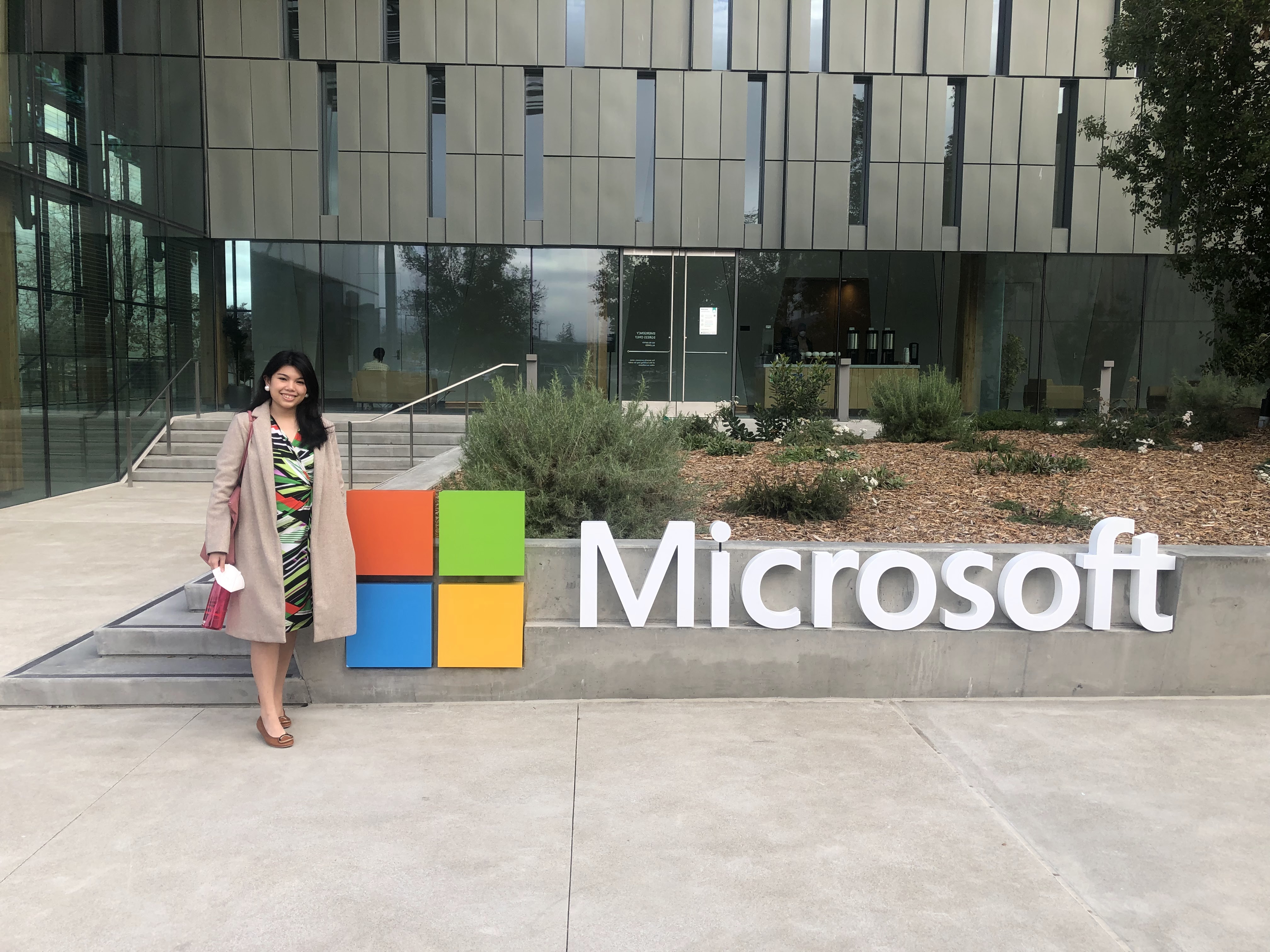
For the first half of January, I was fortunate enough to be selected for the course titled “IP Strategies in Tech Industries," held in Silicon Valley, California.
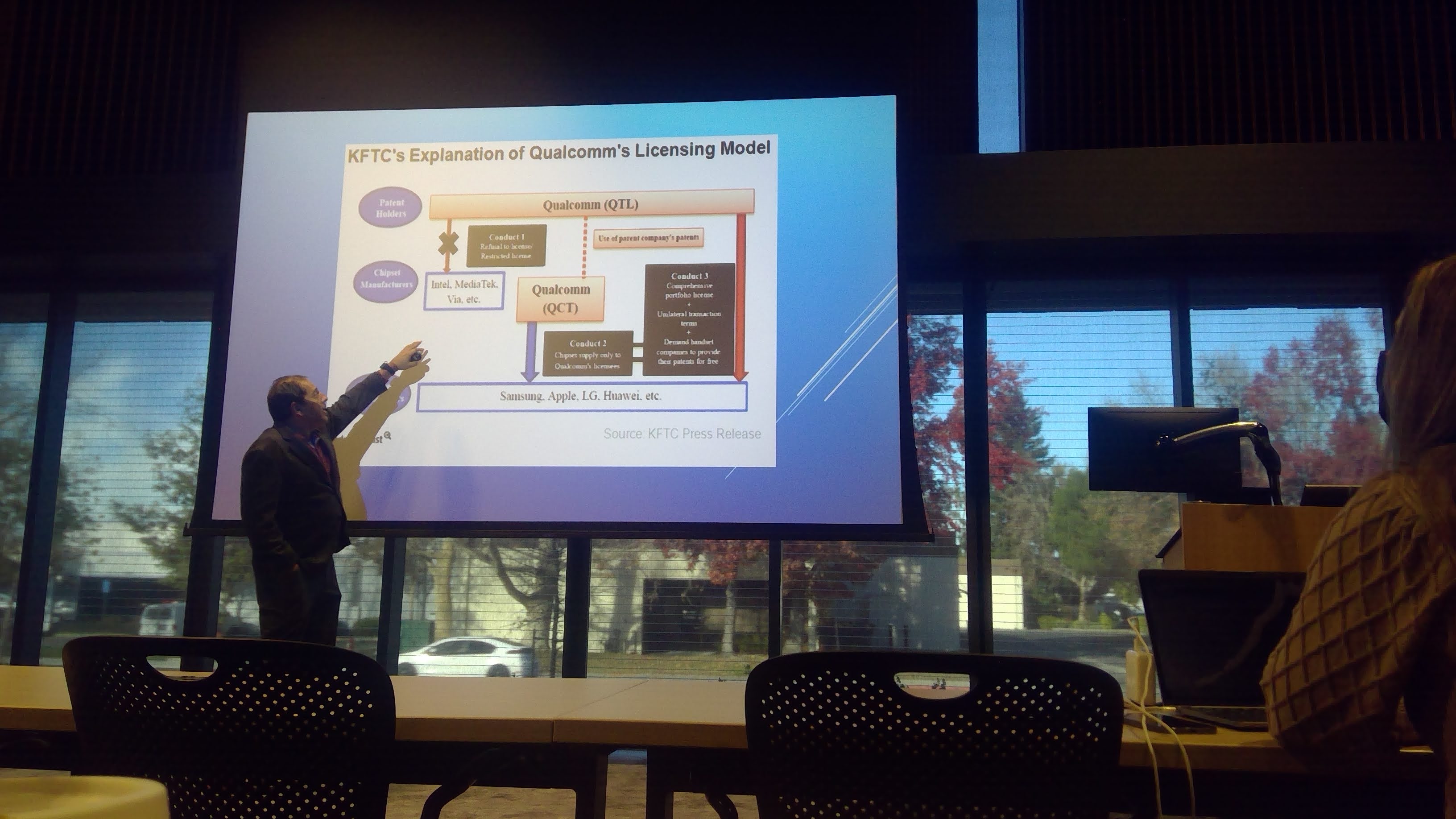
We had to apply for this course last semester and the professor had to evaluate our credentials, as well as our personal essays, before being accepted into the class. The seminar aims to address recent IP issues in the tech field by going through the patent battles caused by converging technologies, such as the smartphone wars, automotive wars, and FRAND (fair, reasonable, and non-discriminatory) licensing terms. It also targets critical discussions on looming issues in the space of cloud wars, data privacy, and AI.
We were able to meet and learn from the chief legal counsels of Microsoft, Google, Facebook/Meta, Qualcomm, Samsung, Apple, and many others. This was under the tutelage of Prof. Micky Minhas, the director of our IP Center and the former general counsel of Microsoft. It was really an incredible and amazing experience because we got to meet the tech giants and personally ask them about legal and business strategies, as well as their career paths towards heading these companies.
Everything I learned about patent law and technology licensing last semester came in handy for this course. Without that, I would have been twenty times more overwhelmed with our readings and assignments. But all that knowledge was upended by practical learnings as well. Coming into this, I thought patents per se are valuable to each company because they are obviously assets that can be commercialized. But this doesn't seem to be the case for big tech companies. Their portfolios are actually liabilities too: exposure to patent trolls, source of sunk costs due to litigation and maintenance fees, and a possible reason for bad PR. It was really an eye-opening course — one that challenged my preconceived notions, stock knowledge (or what little of it I had), and beliefs about the tech world.

- Mickey Minhas, formerly from Microsoft and Qualcomm (our professor and Director of the Franklin Pierce Center for Intellectual Property)
- Allen Lo of Meta (Facebook)
- Mike Lee of Google
- JP Hong, formerly of Samsung and currently with Qualcomm
- Krishna Sood of Microsoft
- Jeff Lasker of Apple
- Heath Hoglund of Dolby
- Courtney Quish of Fortress IP Finance Group
- Shawn Ambwani of Unified Patents
- Rajiv Patel of Fenwick & West LLP

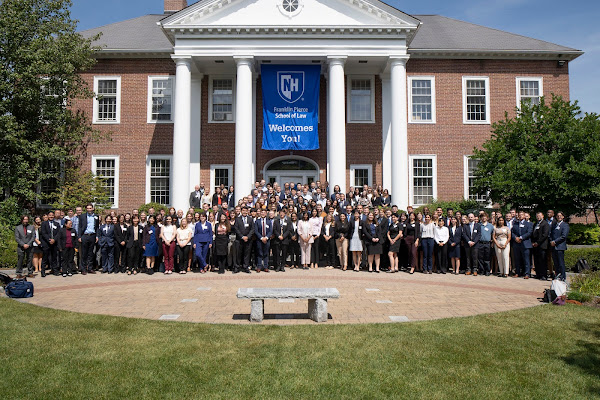
Anyway, here are a couple more photos from our Silicon Valley immersion. I sneaked in a few from our visit to the Google Campus too!


.jpg)


16 September 2021
31 March 2021
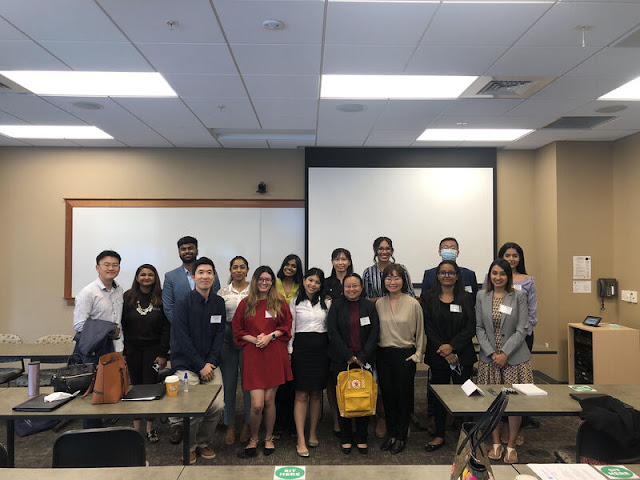
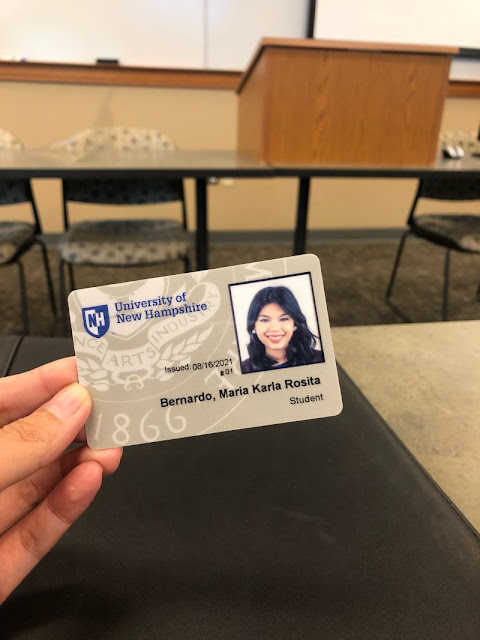
Because of the ongoing pandemic (and last year's deferral), I decided to take my chances and apply to other universities for my LLM, despite believing that some of them may be quite a reach. While my heart was set on going to UNH Franklin Pierce because of its consistently top-ranked and renowned intellectual property law program, a part of me also wanted to see if I had a shot at other schools, if only to explore other options and satisfy my need for affirmation. (Insert insecurities caused by law school here.)
Realistically, I wanted to apply to California law schools because I might have a chance of defraying costs, considering the relatives living there. I have an aunt in San Francisco and we have close family friends in Los Angeles. I greatly enjoyed my last visit in 2017 and have always felt like I belonged more to the sunny West Coast.
But deep down, I wasn't sure if I'd even get in these schools. It's no secret that I did not excel that much in law school grades-wise, and I had a hard time coming to terms with that. Typical law school story: I was a consistent honor student from grade school to college, so to find myself in a place where everyone was so much better, the environment wasn't as encouraging, and the subjects were so terrifying certainly took some adjusting. But of course, I did manage, and I did survive. I found great, supportive, life-long friends (in my sorority, my block, and in different batches) who helped me hurdle four-and-a-half years.
And I did eventually stumble into a field I enjoy, enough that I now think I'm deserving of pursuing higher studies in it. Ha! Me, wanting to study more law? Crazy how it all turned out.
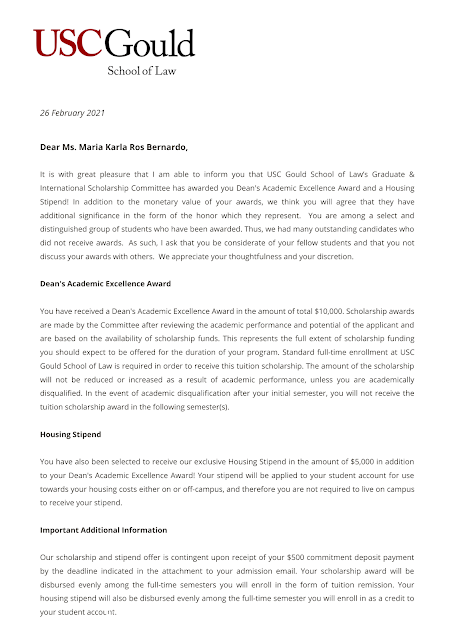
I'm happy to share that I got zero rejections in all the schools I applied to. I got accepted to University of Southern California, University of California Davis, and University of California Hastings. Even better, I was offered merit scholarships / Dean's Academic scholarships in all three law schools. To say that I was shocked would be an understatement. Me??! How did this happen!
In addition, I got waitlisted at UC Berkeley and UCLA, schools where I was a hundred percent sure that I will be rejected. I kept telling myself, before pressing the "Submit" button on LSAC, "Sayang lang application fee ko dito." For real. I could not believe that my application was even strong enough to merit being placed on the waiting list for these universities. I didn't get rejected! What!
(I also got accepted to Loyola Law School and Santa Clara University last year. Yay, Jesuits!)
My grades in law school were not stellar, but I'd like to believe that I made up for it with my "softs" - work experience, internships, and strong application letter. During law school, I actively pursued internships during the summers, including work for the Regional Trial Court and the Supreme Court. I'm certain our fourth-year internship for the UP Office of Legal Aid (OLA) and externship for the Office of the Government Corporate Counsel (OGCC) helped as well. This, on top of my work experience that focused specifically in IP and media law, and my teaching experience.
Perhaps more significantly, in my personal statement, I made sure to highlight my affinity for arts and literature. It was the reason why I mainly wanted to pursue IP. Outside law school and in practice, I kept writing, had a few articles published in magazines and newspapers, and continued to explore this pursuit. I honestly think this helped make my application stand out because it showed an aspect of me beyond academics. It also reinforced why I wanted to pursue an LLM in IP: I honestly wanted to make a significant impact in the Philippine literary, artistic, media, and entertainment landscape.

11 February 2021

My third anniversary in the office is coming up (tomorrow, to be exact), and it just dawned on me that I haven't exactly written about my work life. Not in my old blog, and not even in my personal journal. I've shared snippets of it on Twitter, my LinkedIn profile is pretty transparent, and surely most people in my circles are aware of the kind of work I do. But it never really occurred to me to really write about what I do for a living - and more importantly, why.
I suppose it's mostly because I don't want to come off as pretentious. People who only talk about their work can come off as insufferable. Especially when they claim to be experts at what they do. And I still feel like there is so much I don't know, so what right do I have to be writing about it?
Then again, it's not as if I'm going to be throwing out random legal advice into the ether. Describing the job - and really thinking about why I'm in it - is certainly worth making some room for, even in my small corner in the digital space. After all, it's almost three years now. Milestones are milestones, and they're worth writing about, aren't they?
Being in intellectual property wasn't something I planned on before I entered law school, and it wasn't even something I considered in law school. Before my fifth year of law, I was dead set on applying at the Supreme Court, particularly in the office of then-Chief Justice Sereno, where I interned that previous summer. But we all knew how things turned out, and by the time I finished taking the Bar, they were no longer taking in new applicants, given the uncertainty of the situation. As such, I was forced to consider the more "traditional" route, i.e. firm life.
I did enjoy IP in law school, in large part due to my professor (and one of our sorority's most esteemed alumni). Something about it made sense to me, mostly due to my undergrad. CAL taught me to value the artistic and creative integrity that comes with each piece of art, innovation, or technology. And considering that I was in deep denial about no longer being a literature major for the entirety of law school, taking this path felt like coming home in many ways.
My law school thesis was actually on fair use. And the topic was serendipitous, in that, all the pieces wouldn't have come together had it not been for my background. One desperate, fateful night in 2016, just a few hours before the deadline for submission of initial thesis proposal topics, I came across several Facebook posts (and links to some blog posts) about an ongoing copyright issue with one writer and one local publishing house. (The writers on both sides included professors from our department.) It was a very interesting, unique, and novel issue on copyright, fair use, criticism, and appropriation of literary works, and one that I had a unique viewpoint from which to see the action.
Two years later, it got published in the Philippine Law Journal. And that very same thesis also landed me my current job. During my interview, one of the partners asked me about my thesis. It caught me a bit off-guard, since none of the firms I previously applied for asked about it. I went into great detail about the topic, arguing passionately for the writer/artist. In another twist of fate, turns out, this law firm represented the publisher! I was so sure I would not get the offer, considering my stand. I walked out of there thinking, "Okay time to search for other IP firms!!!" But I got invited to a second interview, and was eventually given an offer.
And now here we are. To borrow from another great KB (Kate Beckinsale, in Serendipity): a fortunate accident.
Since then, I've handled cases on copyright, trademark, and patent enforcement and litigation. I am also assigned work that deals with the policy aspect of intellectual property. We assist in the drafting of university and institutional IP policies and agreements, as well as give advice on certain government-funded technology projects. I also do contract reviews and provide legal opinions on franchising and licensing agreements, artist/producer/director contracts, and other IP related matters. We handle local and foreign clients, and we provide opinions on a variety of novel issues. You'd be surprised at how much IP intersects with a lot of other fields.
Last November 2019, I was selected by my firm as a delegate for the Licensing Executives Society (LES) Young Members’ Circle Asia-Pacific Conference in Seoul, South Korea, where I learned more about global licensing particularly on beauty, healthcare, telecommunications, big data, artificial intelligence, and entertainment. It was such a privilege to have been selected to attend that short conference. I got to meet other IP practitioners from Manila, and all over the world. But I'm not going to lie, my favorite part of the whole thing was the fellowship with other attendees. We all went to a cozy, underground jazz bar and drank all night. (All while trying to squeeze trite trademark-related jokes in between.) It was a blast.
Something I'm most proud of during quarantine was being part of the Technical Working Group in the Supreme Court that worked on the amendments to the Rules of Procedure on Intellectual Property Rights Cases. One of our partners was part of the TWG, and he tagged me along. Before the start of the pandemic, we would regularly attend meetings at either the IPO or the SC. And during quarantine, we had bi-weekly Zoom meets to discuss, go through, and align all provisions and proposed amendments. Since my boss was the expert private practitioner in the group (even the justices deferred to him on some matters), we worked double-time on ironing out the kinks, while consulting other laws and even rules from other jurisdictions. And yes, even on weekends. But it was so satisfying because it felt like a significant contribution to the practice. I have to admit, I cried a bit when the Rules were finally published on the newspaper. My name wasn't there (my boss' was though), but deep down, I was like, "I helped!!!"
And just this week, our boss again tagged me along to join him as part of a TWG in Congress, this time for the amendments of the IP Code itself. I can anticipate a pretty long, gruesome, and thorough process again. But it all sounds exciting.
Exciting. I guess that's the important keyword right? The last twelve months have been stressful as f*ck. For about two-thirds of 2020, we were only two associates. (Two resigned pre-pandemic.) There were days when I'd literally cry myself to sleep, then cry myself awake. Highly unusual for masandal-tulog, parang-mantika-matulog me. But... I don't know. I still very much enjoy the work. As much as I hate litigation (I really do; but my frustrations about it are for another post altogether), I still like everything else I'm doing.
I like doing what I do. Which isn't saying a lot for most people. A friend once told me that your mission is where your deep happiness meets a deep hunger of the world. I don't know if I'm at a point in my life where I can say that about being a lawyer. Or this practice, even. The truth is, I've never fallen in love with lawyering the way everybody - including myself - expected. I crawled my way out of law school, desperate for affirmation, lost as to purpose. But somehow, surprisingly, I managed to find a good, comfortable place that I actually like. Me, liking the intricacies of the law? Who would've thought? Maybe I'll be elsewhere years from now. Maybe I'll come across a field or a job that is truly representative of all my interests (and that does not involve appearing in court). Maybe not. But right now, I still like this.
And maybe that's a good thing.

21 January 2021

"When day comes, we ask ourselves
where can we find light in this never-ending shade?"
I had no intention of staying up until two in the morning to finish checking final exam papers, but I tuned in to Joe Biden's inauguration and decided to watch until the end. Something about going through my students' answers on legality, moral justification, Dworkin's hard cases, and MLK's nonviolent direct action made me realize how important it is to be reminded that for our institutions to work, we must not lose sight of people. Actual people. Citizens are not some abstract concept — our laws affect us directly. Words have a tangible effect on us. When leaders see their constituents as humans, rather than mere pawns, change - the good kind - can happen.
*
I've had the privilege of being invited to teach at the University of Makati School of Law last semester. I taught Philosophy of Law to wide-eyed and eager first years. I was just as eager. More than just teaching them the law, I felt it was important to impart the wisdom behind it — especially given everything that's happening. Why do we need it? How can it be used for the greater good? And to what extent should it shape our lives? A lot of people treat the law as merely a weapon: it has the power to command, to sanction, to delineate. But, again, in practice, when you go to the courts, and you see actual people on the receiving end of these words, you realize that these laws don't exist in a vacuum. They affect people in a real way. When drafted haphazardly or when applied irresponsibly, it is incredibly damaging. But when used for good, it can help heal.
The class was receptive and responsive to these concepts, mostly because of their diverse backgrounds. The block had a former criminology student, a radio journalist, working parents, media practitioners, government employees, accountants, members of the LGBT, fresh college graduates, breadwinners — all walks of life, from different parts of the country. It was a good learning experience for me as well. I discussed the readings I assigned through the lens of my own experience. But most of them were able to process them through interesting and more meaningful angles. Listening to their perspectives every meeting was confirmation that the profession thrives with diversity. The law is enriched when we consider the input of people coming from different backgrounds. Finding a more equitable common ground is only possible when we consider the concerns of many, and not just the select few.
Most striking to me, though, was how earnest they seemed in just wanting to be good and to do good. Since the time I graduated from law school, things have gotten much worse. And I cannot imagine the exhaustion and hopelessness they must feel having to learn about these concepts at a time like this. Instead of feeling discouraged, however, I felt the desire — even the desperation — to want to do well so that they can contribute in some way, somehow, in the future. Discussions with other faculty members also echoed the same sentiments: they're really trying. The dire circumstances of this administration weigh heavily on all of us. Everyone is suffering and being apathetic is just not going to cut it. If there's a silver lining to all this, it's that more and more people are realizing that things have to change. And they want to play a part in doing that.
*
I read Joe Biden's book, "Promise Me, Dad," last year, mostly in the dark, during a power outage caused by a typhoon. To be honest, I had no real investment in his campaign or career prior to that. And even after having read it, I don't think I have a complete picture of who he is as a politician. (It is, after all, a memoir, so much of the narration has to be taken with a grain of salt since he's telling his version of events from 2013 to 2015 — of course, he had to downplay some conflicts and play up others.) The book covered only a very limited period of his life: during the last few years of his vice presidency, when he was dealing with his son Beau's cancer diagnosis, handling matters regarding Iraq, Russia, and Crimea, and considering whether he was going to run for the 2016 presidential elections. But it was a good distillation of who he was, essentially: a person who has grappled with sorrow and defeat — many times and in many ways.
Biden survived the death of his first wife and baby daughter, raising his two toddlers who survived that car crash, losing Democratic primaries, not being endorsed by the President, and having his eldest son succumb to cancer. He had to loan from Obama for his son's medical bills, he overcame a stutter as a child, he was not a particularly excellent law student (#relate). He wasn't, by any means, a brilliant guy. Maybe I'll always have a bias towards people who have swum through the depths of grief. Maybe I'll always wear grief on my sleeve, or like a small flag brooch pinned to my emotional lapel. But there's a reason for me to believe that he is likely to lead well because he's no stranger to struggle. He knows how to listen. He certainly can't change US politics (their history is much too tarnished for any one person to ever change their legacy). And we still need to be vigilant about how their policies greatly impact other countries, including our own. But in times like these, even though the bar is so low, his capacity for compassion isn't such a bad thing.
I really wish the Philippines follows suit soon. The shamelessness, the duplicity, the corruption of this administration in the middle of a pandemic — it's sickening and terrifying. I can't wait for us to see the light at the end of the tunnel. It still seems so implausible. But I can't help but feel hope. We have to. It can't be that far off, can it?
*
Triteness notwithstanding, I honestly believe that the most important thing to teach law students is the notion that knowing the law places you in a position to help. Ironic, since law school tends to attract the self-absorbed, pompous, power-hungry types. But it shouldn't be that way. And even if it were, it should change their perspective.
It was serendipitous that I got assigned to teach that subject. Preparing the syllabus meant I had to go through different readings and reacquaint myself with these concepts again (which, if we're being honest, slipped through the cracks of my mind when I was taking this subject in my first-year law). While the teaching environment this semester was challenging, it also opened more opportunities for me to converse with students in a less stringent way. During the first day of class, most of them were honest about their personal struggles, as well as their feelings of intimidation regarding a philosophy subject. But it was encouraging to me that these students responded well to the syllabus, and that, as shown by their performance in class, they were able to grasp early on that the stability of our institutions depends on how well our laws are upheld and to what extent they bend towards justice and equity.
*
The rest of the climb still seems steep and daunting. I honestly don't see 2021 being that much different from 2020. It will take years, maybe decades, before the damage of bad leadership is undone. (Duterte is a monster.) But hopefully, it will come sooner than later. I have to trust that it will happen if only to keep myself afloat. Teaching certainly helped: if I could instill that in my students, I could certainly make myself believe that too. And if they can make me believe that there are so many people out there who want to learn more to be able to do more good, then there's reason to hold out hope.
Wishing that the words by Amanda Gorman, the young 22-year-old poet laureate who spoke during the inauguration, can serve as both a compass and an affirmation:
"But while democracy can be periodically delayed,it can never be permanently defeated.In this truth, in this faith, we trust."— The Hill We Climb by Amanda Gorman
(P.S. And here's to hoping it will take the art, the poetry, and the optimism of the young — our generation — to steer us towards better days too.)

29 August 2020

"I feel both grateful and ashamed to have a chance to go off the grid to focus on research. I’m running from looming family mortality into the arms of historic—and historical—tragedy. Part of me thinks I shouldn’t go. But I know it might be the journey of a lifetime."
"The future we’re digging for ourselves is at the bottom of a cliff that grows higher every day. But that’s not the same as saying nothing can be done. There are eggs to fry. There is history to remember and glaciers to measure. There is trash to count.
So much is already going or gone. But what’s still there is vast, stupendous."
"I’ve come back to say that this place is singing a love song. It may be shot through with grief and danger, but if you’re listening and you can hear this, it means we’re not dead yet."

01 May 2020


29 April 2020
 |
Taken sometime in April 2018, a few days after our results came out, when I claimed my bar clearance and set my schedule for Roll Signing.
|
It's still quite surreal to realize that it's been two years since our bar results came out. Every time it gets mentioned, my muscles tense up and my brain blanks out. (Talk about post-traumatic stress.) Considering the amount of pressure we all had to endure in the years leading up to our own bar exams, the feeling of anxiousness remains. I guess one never fully recovers from the experience of being at the mercy of such a long, arduous exam. Every year, even after your own results, you will find yourself saying, "Wow, lives are going to be changed today."
On the day of our bar's release, my mom, grandparents, and I went to Mass at Baclaran Church, in an attempt to make a final, desperate plea to God, Mama Mary, all the angels and saints. But the Mass finished at 10:00, and the results are coming out at noon, so there was still a long and agonizing two-hour wait. My grandma, as if on cue, decided they needed to buy some groceries, so off to S&R Macapagal we went. For the next hour or so, we all pretended to care about wholesale deals and rotisserie chicken.
"She passed! Her name is on the list."
And thus began what seemed like the longest, most bizarre, time-warping, continuum-shattering minute of my life, all while jumping, skipping, and hopping - in a dress. I could not believe it. I made it.
Minutes later, my phone got flooded with call, texts, and messages. The rest of the day went by like a blur. (The only other thing I could remember was the Razon's Halo-Halo they treated me to after shopping at S&R. It was the best reward/comfort food I could have asked for.)
Nothing has been the same since.
Life as a lawyer thus far has had its ups and downs. Some days are slow, some days are exciting; no two days are ever alike. I still doubt myself sometimes, and often feel like I'm still much closer to my wide-eyed, anxious bar reviewer self than some version of a confident, aggressive attorney. But I'm quite happy. Since then, I've appeared in court, reviewed contracts, prepared pleadings, attended search warrant enforcements, drafted university IP policies, and even got to teach. So many great things have happened since that day, and much of my families' prayers were answered on that fateful Thursday afternoon.
Two years ago, on April 26, our bar results came out. I took the bar and passed the bar at 26 years old. My birthday is also on the 26th (of October). On the list, I was bar passer 242 too. 24+2 = 26.

And interestingly enough, World Intellectual Property Day is celebrated on April 26.
Synchronicities are peculiar. I've never been one to anchor my fate on numbers, and I'm not sure if there really is a grand design to all this - but I'm inclined to think perhaps life gives us these patterns to remind us to trust in the Universe and its mysterious ways, and to always just believe that maybe, just maybe, some things are really meant to be. We just have to wait and let them unfold.
Happy anniversary, self! ❤
Today, thousands await the results of the 2019 bar exams.
For any #Bar2019 hopeful who might come across this blog: Whatever the outcome, your lives will be changed for good today. I hope this day will constantly remind you to remain humble, to always be of service, and to keep fighting.
Remember that you survived law school, hurdled bar review, and successfully took on all four Sundays of the bar exam. Those were all seemingly insurmountable, but you managed. Today's results are not an affirmation of your capability to overcome hardship. You already did! Trust me, ALL the experiences & lessons you learned in the last four to five years are what will help define the kind of lawyer you will be, not just the bar.
So when you do get admitted to the practice, don't stop reminding yourself that you are worth more than just an exam. Cheering for all of you! Claim it. Life can only get better from here on out.
There's still so much more to learn, to do, and to achieve. Today is just the beginning. 🌻🌻🌻


01 April 2020
You may have been told all your life that there were certain things you needed and certain things you needed to do, but it turns out that you don’t need most of those things and you don’t really need to do anything. In fact, nothing would be better for the world right now than if we all stopped trying to achieve things and said, “We no longer believe work will set us free, it is the opposite, in fact,” and behaved accordingly. There is nothing to achieve right now except to insist that the only achievement is caring for others, and not caring specially for family or friends, but in caring for every person as our family or friend.
There are no answers right now to anything, only questions on questions. But the forsythia is beginning to bloom, and house wrens are singing. It’s time for woodcocks to start mating in the marshy meadows, and comfortingly, they are. And I just found two [sugar maple] trees that live in my woodlot in defiance of all experts and odds.
I listen to the news, but I also listen to nature, and what it’s telling me right now is this: we can’t see everything there is to see. We don’t always know all we think we know. And the very last thing we should ever give up is the possibility of miracles.
Social Media